
How to Read a Floor Plan: A Complete Guide for Homeowners
Share
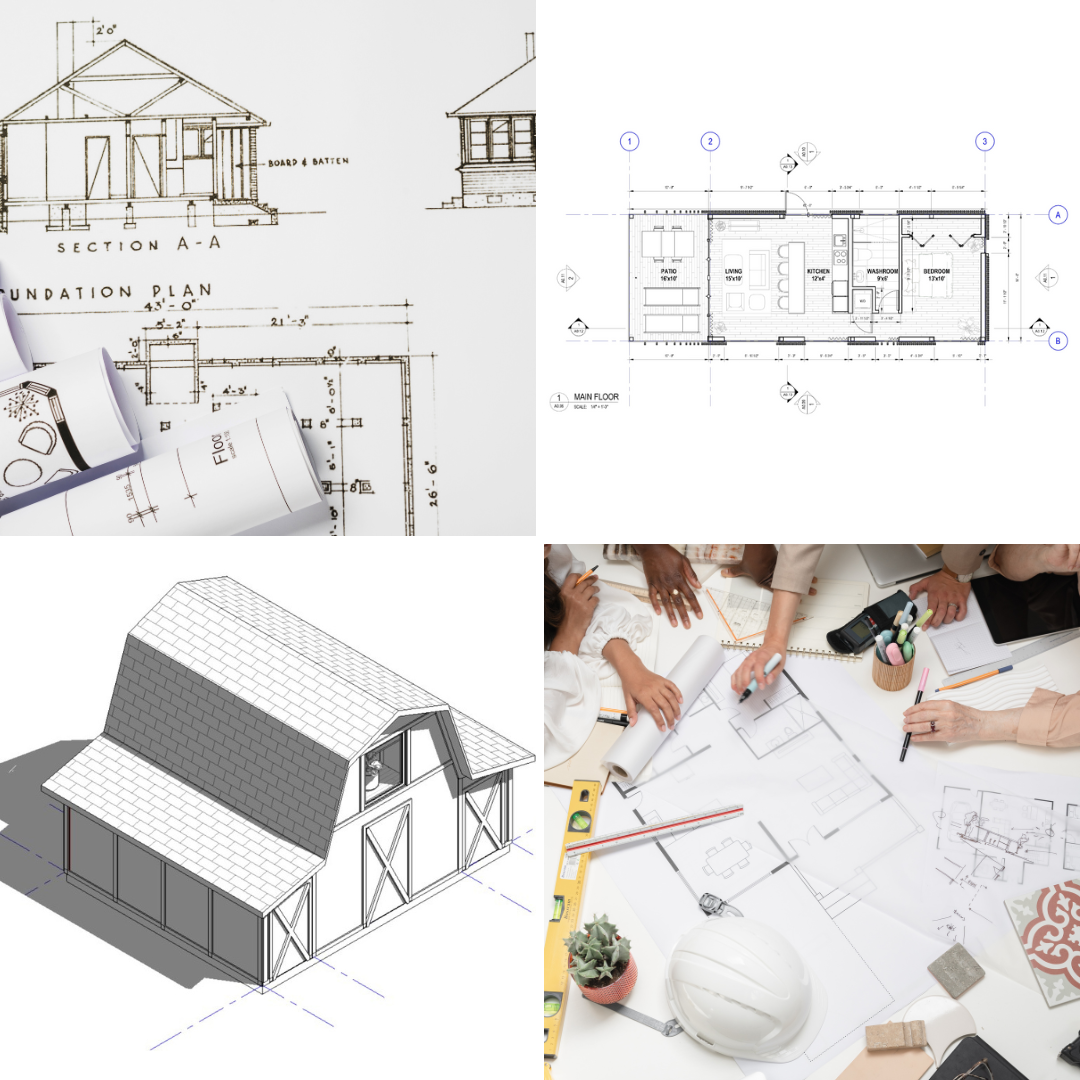
Whether you're buying a new home, planning a renovation, or exploring custom home builds, understanding how to read a floor plan is one of the most valuable skills you can develop. Floor plans are the universal language of architecture — they tell you exactly how a space is laid out, how rooms connect, and how your future home will feel to live in.
In this guide, we'll break down everything you need to know about reading floor plans, from understanding basic symbols to interpreting dimensions and room flow. By the end, you'll be able to look at any home plan with confidence.
What Is a Floor Plan?
A floor plan is a scaled diagram of a room or building viewed from above. Think of it as a bird's-eye view with the roof removed. It shows the layout of rooms, the placement of walls, windows, doors, and built-in features like closets, staircases, and cabinetry.
Floor plans are drawn to scale, meaning the measurements on the drawing represent proportional real-world dimensions. A typical scale for residential plans is 1/4" = 1'-0", meaning every quarter inch on the drawing equals one foot in real life.
Understanding Wall Types
Walls are the most prominent elements on a floor plan, and they're not all equal. Here's what you'll typically see:
- Exterior walls — shown as thick, solid lines. These are your home's boundary walls and are typically the thickest on the plan (6" or more with insulation).
- Interior walls — thinner solid lines separating interior rooms. Usually 4–5 inches thick.
- Load-bearing walls — may be indicated with special notation. These walls support the structure above and cannot be removed without engineering review.
- Partition walls — non-structural walls that divide space and can often be relocated.
Reading Door Symbols
Doors are represented by a straight line (the door panel) and a curved arc showing the door's swing path. This is important for planning furniture placement — you don't want a couch blocking a door swing.
- Single swing doors — the most common; one panel with an arc.
- Double doors — two panels, two arcs mirroring each other.
- Sliding doors — shown as two overlapping rectangles with no arc.
- Pocket doors — a dashed line showing the door sliding into the wall cavity.
- Bifold doors — common on closets; shown as two angled panels.
Interpreting Window Symbols
Windows appear as a break in the wall line with parallel lines running through it. The number of lines can indicate the type of window (single-hung, double-hung, casement, awning, etc.). Bay windows project outward from the wall and are shown as angled protrusions.
On plans intended for permitting, windows are typically labeled with a number or letter that refers to a window schedule — a separate table that lists the exact size, type, and manufacturer of each window.
Understanding Room Dimensions
Dimensions are typically shown as thin lines with arrows or tick marks at each end, with the measurement written above or below the line. Key things to note:
- Overall exterior dimensions show the total footprint of the home.
- Interior dimensions show the usable floor space within each room.
- Dimensions are almost always given in feet and inches (e.g., 12'-6").
- String dimensions chain several measurements together to show running totals.
"A room labeled 12' × 14' sounds abstract — but when you know a queen bed is 5' × 6'8", you can immediately visualize whether the room works for you."
Reading Kitchen and Bathroom Layouts
Kitchens and bathrooms contain the most symbols and detail on a floor plan. In kitchens, you'll see countertop outlines, the sink (shown as a rectangle with a circle), the refrigerator (large rectangle), the dishwasher, and sometimes the range with burner circles. Bathroom fixtures include the toilet (shown as an oval on a rectangular base), the bathtub (a large rectangle with a small oval for the tub), the shower (a square with an "X" or diagonal lines), and vanity cabinets.
Stairs and Multi-Level Homes
Stairs are shown as a series of parallel lines (each representing one step) with an arrow indicating the direction of travel — either "UP" or "DN" (down). If you're reviewing plans for a two-story home, you'll have a separate floor plan for each level, and the stair opening will appear on both.
North Arrow and Orientation
Every professional floor plan includes a north arrow. Orientation matters more than most people realize — it determines which rooms get morning sun, where you'll need window coverings, and how the home's passive solar performance will perform. South-facing living areas maximize natural light and warmth in colder climates, while north-facing bedrooms stay cooler through summer nights.
Common Floor Plan Abbreviations
You'll encounter a range of abbreviations on detailed floor plans. Some of the most common include: W/D (washer/dryer), WH (water heater), CLO (closet), LIN (linen closet), PAN (pantry), DN/UP (down/up on stairs), OH (overhead), and A/C (air conditioning unit).
Why Floor Plans Matter Before You Build or Buy
Reading a floor plan before committing to a home or build project can save you thousands of dollars in costly changes later. Professional home plans — like those designed with Revit and architectural software — include all the detail you need to understand exactly what you're getting.
Reviewing a plan before construction lets you identify issues like awkward traffic flow, bedrooms that lack privacy, or kitchens that face the wrong direction. Changes made on paper cost nothing. Changes made during framing cost a fortune.
Browse Our Ready-to-Build Home Plans
Explore our full collection of professionally designed, permit-ready house plans — from cozy cottages to modern farmhouses. Every plan includes detailed floor plans, elevations, and sections.
Final Thoughts
Reading floor plans is a skill that takes a little practice but pays dividends for life. Whether you're a first-time homebuyer, a self-builder, or simply a curious homeowner, understanding what those lines and symbols mean puts you in control of one of the biggest decisions of your life. The more fluently you can read a plan, the better equipped you are to ask the right questions, spot potential problems, and ultimately create a home that truly works for how you live.
Start with the basics — walls, doors, and windows — and build your confidence from there. Before long, you'll be reading architectural drawings like a pro.